





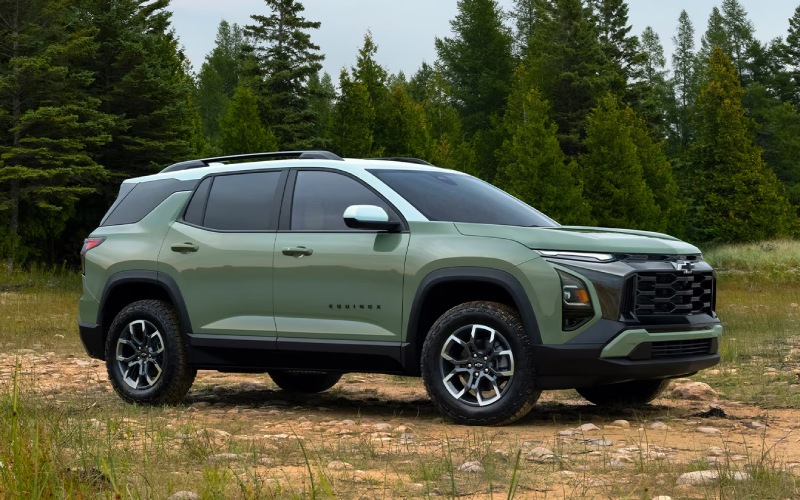
Jay Hatfield Chevrolet of Pittsburg – Does the 2026 Chevrolet Equinox or 2026 Toyota RAV4 Deliver Smarter In-Car Tech for Joplin, MO Commuters?
When you compare tech and everyday usability in the latest compact SUVs, two names rise to the top of many lists—Chevy’s Equinox and Toyota’s RAV4. The question we hear most from Joplin, MO, commuters is simple: which cabin tech is easier to live with day to day, and which SUV helps you stay focused and connected without fuss? This deep dive focuses on screens, voice control, smartphone integration, cameras, and driver assistance that matter on I-44 hops, downtown parking, and school drop-offs.
Chevy’s approach spotlights clarity and simplicity. The Equinox equips an 11.3-inch infotainment touch-screen across the lineup, paired with an 11-inch Driver Information Center to keep guidance and gauges front and center. Google built-in is a major differentiator—it puts Google Assistant, Google Maps, and select apps directly into the vehicle, reducing the need to toggle between your phone and the car’s system. Wireless Apple CarPlay® and Android Auto™ are on tap, plus available wireless charging to keep clutter down. Toyota’s RAV4 counters with a standard 12.3-inch digital gauge cluster and an available 12.9-inch multimedia screen that looks sharp and responds quickly. Toyota’s interface is robust, offering cloud-based navigation and voice features, and it layers in helpful innovations like Drive Recorder on select trims. The takeaway? Both vehicles can be great fits, but Chevy’s Google-native setup offers less handoff between phone and vehicle and feels more natural for users invested in Google services.
Screen usability and voice assistance
Big screens aren’t just about wow factor—they’re about minimizing distraction. The Equinox’s 11.3-inch display uses logical tiles and quick-access tabs for audio, nav, and phone, while Chevy keeps essential hard keys and steering-wheel controls available so you can make common changes by feel. With Google Assistant as part of Google built-in, saying “Hey Google, route me to work” pulls up guidance as quickly as you would at your desk. Toyota’s large available 12.9-inch screen and standard digital cluster impress, and the brand’s voice assistant handles natural phrases well; however, the Equinox’s deep, native Google integration provides a small but meaningful edge for drivers who rely on Google accounts and apps daily.
Camera clarity is another key factor. The Equinox’s available HD Surround Vision stitches together a crisp overhead view, which pays off when parallel-parking in tight downtown Joplin spots or backing into a short driveway. Toyota’s available Panoramic View Monitor brings similar functionality to RAV4 shoppers, and it is an important upgrade if you frequently park on busy streets. In both cases, choosing the 360-degree camera option is highly recommended for city and suburban environments where sightlines get tight and curbs and posts can lurk below window level.
Smartphone connections and distraction management
Wireless Apple CarPlay® and Android Auto™ are offered on both, but how each system manages the handoff from phone to vehicle can change the feel of your commute. The Equinox is especially good at maintaining a seamless connection day after day; add the available wireless charging pad, and you can drop your phone in the tray and focus on the drive. Toyota’s RAV4 supports wireless smartphone integration and available dual wireless charging on higher trims, which is great for couples or families swapping seats. The point is not that one has a singular must-have item the other lacks; it is that Chevy ties the whole experience together with a single, standard display and Google-native features so everything feels consistent across trims.
Driver assistance that works with you
Driver assistance is about confidence, not gimmicks. The Equinox includes over 15 standard safety and driver assistance features, anchored by Chevy Safety Assist, and offers available features like Rear Cross Traffic Braking, a Rear Camera Mirror, and Side Bicyclist Alert. These are the small helpers that reduce stress in crowded lots and on multi-lane merges. Toyota Safety Sense 4.0 brings a sophisticated suite to the RAV4 as well, with available features like Traffic Jam Assist and Advanced Park that shine in specific scenarios. Our advice: think about how and where you drive most. If you frequently navigate garage ramps, school lots, and parallel spaces, prioritize the 360-degree camera feature on either SUV and consider features like Rear Cross Traffic Braking that help when visibility is compromised.
For many Joplin, MO, commuters, the right choice comes down to which interface you find more intuitive in five minutes behind the wheel. The Equinox’s standard screen size and interface consistency mean you do not have to step up to a higher trim to enjoy flagship-level clarity. Toyota’s available larger screen and feature set are excellent, especially if you are drawn to the brand’s approach to voice prompts and menu flow. Neither choice is wrong—yet the Equinox’s native Google integration and consistent screen strategy make it refreshingly easy to live with if you rely on Google tools for your calendar, maps, and reminders.
Key tech highlights to consider
- Screen approach: Equinox uses a standard 11.3-inch infotainment display across the lineup; RAV4 offers an available 12.9-inch display on select trims.
- Voice and nav: Equinox integrates Google Assistant and Google Maps natively; RAV4’s system supports robust voice controls and cloud-based navigation.
- Cameras: Both offer a 360-degree camera system; Equinox’s HD Surround Vision is especially crisp in low light and tight spaces.
- Phone integration: Both support Wireless Apple CarPlay® and Android Auto™; Equinox also offers available wireless charging to reduce cord clutter.
- Everyday safety: Equinox includes over 15 standard safety and driver assistance features; RAV4 features Toyota Safety Sense 4.0 across the lineup.
If you are evaluating which SUV feels more natural to use on a Monday morning drive, the deciding factor is often how the system “thinks.” Chevy’s consistent hardware and Google built-in ecosystem reduce the time you spend learning menus and reconnecting a phone. Toyota counters with crisp displays and feature depth as you move up trims. Both are strong, and both will keep you connected—just be honest about how much you value native Google features and a standardized screen experience at every trim level.
Frequently Asked Questions:
Do both SUVs offer a 360-degree camera?
Yes. The Equinox offers available HD Surround Vision, and the RAV4 offers an available Panoramic View Monitor that provides a similar overhead perspective.
Is Google built-in available on both?
No. The Equinox offers Google built-in integration. The RAV4 supports robust voice control and smartphone integration, but does not offer native Google built-in.
Can I use Apple CarPlay® and Android Auto™ wirelessly?
Yes. Both vehicles support Wireless Apple CarPlay® and Android Auto™ on compatible trims.
Which system is easier to learn quickly?
Ease of use is subjective, but many shoppers find the Equinox’s standard screen size and Google-native layout straightforward from day one, while the RAV4’s available large display and menus are intuitive once you learn their structure.
Ready to compare them back to back and find your ideal setup? Visit us at Jay Hatfield Chevrolet of Pittsburg for a side-by-side demo. We are proudly serving Parsons, KS, and Joplin and Neosho, MO, with expert guidance and friendly, local insight.
Request more 2026 Chevrolet Equinox information
Connect with us

- September 2026
- August 2026
- July 2026
- June 2026
- May 2026
- April 2026
- March 2026
- February 2026
- January 2026
- December 2025
- November 2025
- October 2025
- September 2025
- August 2025
- July 2025
- June 2025
- May 2025
- April 2025
- March 2025
- February 2025
- January 2025
- December 2024
- November 2024
- October 2024
- September 2024
- August 2024
- July 2024
- June 2024
- May 2024
Archives
- Accessories
- Chevrolet Colorado
- Chevrolet Equinox
- Chevrolet Silverado 1500
- Chevrolet Silverado 2500 HD
- Chevrolet Tahoe
- Chevrolet Trailblazer
- Chevrolet Traverse
- Chevrolet Trax
- Equinox
- GMC Acadia
- GMC dealership
- GMC Sierra 1500
- GMC Terrain
- HUMMER EV Pickup
- Jay Hatfield Chevrolet GMC of Pittsburg Service
- Parts
- Service
- Sierra 1500
- Sierra 2500 HD
- Sierra EV Denali Edition 1
- Sierra HD Denali
- Silverado 1500
- Silverado 2500 HD
- Silverado HD ZR2
- Suburban
- Tahoe
- Uncategorized